



Concrete is one of the most widely used construction materials in the world, known for its strength and durability. However, it has a significant drawback: it is prone to cracking. Cracks in concrete can lead to a variety of problems, including reduced structural integrity, water infiltration, and corrosion of reinforcement. This is where steel fiber comes into play. As a leading supplier of Concrete Steel Fiber, I am excited to share how steel fiber can improve the crack resistance of concrete.
The Basics of Concrete Cracking
Before delving into how steel fiber enhances crack resistance, it's important to understand why concrete cracks in the first place. Concrete is a brittle material, and it experiences volume changes due to factors such as drying shrinkage, thermal expansion and contraction, and external loads. When the tensile stress in the concrete exceeds its tensile strength, cracks form. These cracks can start small but may propagate over time, leading to more serious issues.
How Steel Fiber Works
Steel fiber is a reinforcement material that is added to concrete to improve its mechanical properties, particularly its crack resistance. When steel fibers are added to concrete, they are randomly distributed throughout the mix. These fibers act as a three - dimensional reinforcement system, bridging the cracks that form in the concrete.
Bridging Effect
The primary mechanism by which steel fiber improves crack resistance is the bridging effect. When a crack starts to form in the concrete, the steel fibers across the crack act as a bridge, holding the two sides of the crack together. This prevents the crack from opening further and spreading. The fibers transfer the tensile stress across the crack, allowing the concrete to withstand higher levels of stress before failure.
Energy Absorption
Steel fibers also contribute to the energy absorption capacity of concrete. When a load is applied to the concrete, the fibers deform and absorb energy. This energy absorption helps to dissipate the stress in the concrete, reducing the likelihood of crack propagation. The more fibers there are in the concrete, the greater the energy absorption capacity, and the better the crack resistance.
Distribution and Orientation
The distribution and orientation of steel fibers in the concrete are crucial for their effectiveness. A well - distributed fiber system ensures that there are fibers available to bridge cracks at all locations in the concrete. The orientation of the fibers also matters; fibers that are oriented perpendicular to the direction of the crack are more effective at bridging the crack and preventing its propagation.
Types of Steel Fiber and Their Impact on Crack Resistance
There are several types of steel fibers available, each with its own characteristics and benefits. As a Concrete Steel Fiber supplier, I offer a range of products, including End Hooked Steel Fiber, 5D Steel Fiber, and Steel Fiber for Dyke.
End Hooked Steel Fiber
End hooked steel fibers are one of the most commonly used types of steel fibers. The hooks at the ends of the fibers provide better anchorage in the concrete, increasing their ability to transfer stress across cracks. This type of fiber is particularly effective in improving the flexural and tensile strength of concrete, which in turn enhances its crack resistance.

5D Steel Fiber
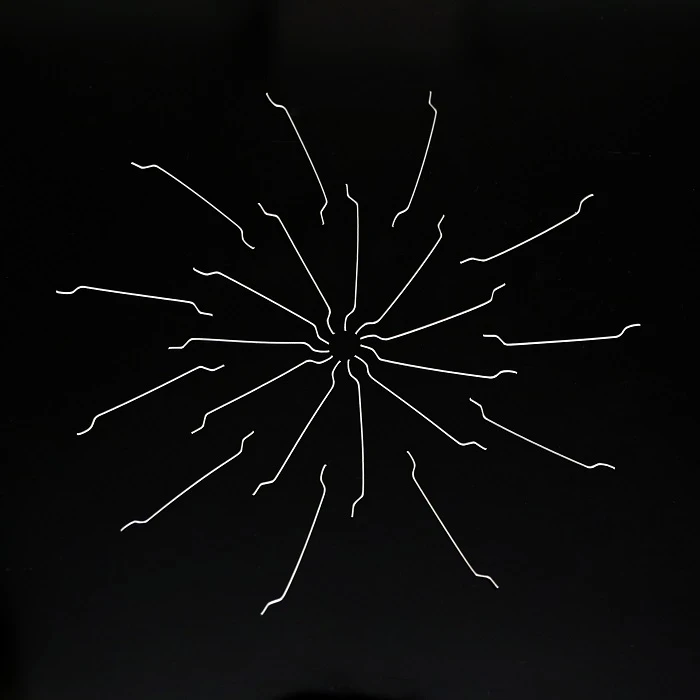
5D steel fibers have a unique shape and structure that provides excellent bonding with the concrete matrix. The complex geometry of the 5D fibers allows for better stress transfer and a higher degree of crack control. These fibers are suitable for applications where high crack resistance and durability are required, such as in industrial floors and bridge decks.
Steel Fiber for Dyke
Steel fiber for dyke is specifically designed for use in dyke construction. Dykes are subjected to various forces, including water pressure and soil movement, which can cause cracking. The steel fibers used in dyke construction are engineered to provide high crack resistance and improve the overall stability of the dyke.
Applications of Steel Fiber - Reinforced Concrete
The use of steel fiber - reinforced concrete has become increasingly popular in a wide range of applications due to its improved crack resistance.
Industrial Floors
Industrial floors are often subjected to heavy loads and traffic, which can cause cracking. Steel fiber - reinforced concrete provides a cost - effective solution for improving the durability and crack resistance of industrial floors. The fibers help to distribute the load more evenly, reducing the risk of cracking and extending the service life of the floor.
Bridge Decks
Bridge decks are exposed to harsh environmental conditions and heavy traffic loads. Cracks in bridge decks can lead to water infiltration, which can cause corrosion of the reinforcement and reduce the structural integrity of the bridge. Steel fiber - reinforced concrete can significantly improve the crack resistance of bridge decks, increasing their durability and reducing maintenance costs.
Tunnels
In tunnel construction, concrete is used to line the tunnel walls and roofs. Cracks in the tunnel lining can lead to water leakage and structural instability. Steel fiber - reinforced concrete can help to prevent cracking and improve the long - term performance of the tunnel lining.
Factors Affecting the Performance of Steel Fiber - Reinforced Concrete
Several factors can affect the performance of steel fiber - reinforced concrete in terms of crack resistance.
Fiber Content
The amount of steel fiber added to the concrete is an important factor. Generally, a higher fiber content leads to better crack resistance. However, there is an optimal fiber content beyond which the workability of the concrete may be affected, and the cost of the concrete increases.
Fiber Length and Diameter
The length and diameter of the steel fibers also influence their effectiveness. Longer fibers tend to provide better crack bridging, but they may also be more difficult to disperse in the concrete. Thinner fibers have a larger surface area, which can improve the bonding with the concrete matrix.
Concrete Mix Design
The mix design of the concrete, including the water - cement ratio, aggregate type and size, and admixtures, can affect the performance of steel fiber - reinforced concrete. A well - designed concrete mix can ensure proper dispersion of the fibers and maximize their crack - resistant properties.
Conclusion
In conclusion, steel fiber is an effective solution for improving the crack resistance of concrete. By providing a bridging effect, absorbing energy, and enhancing the overall mechanical properties of the concrete, steel fibers can significantly reduce the formation and propagation of cracks. As a Concrete Steel Fiber supplier, I am committed to providing high - quality steel fibers that meet the specific needs of different applications. Whether you are working on an industrial floor, a bridge deck, or a dyke, our range of steel fibers, including End Hooked Steel Fiber, 5D Steel Fiber, and Steel Fiber for Dyke, can help you achieve better crack resistance and durability in your concrete structures.
If you are interested in learning more about our steel fiber products or would like to discuss your specific requirements, please feel free to contact us. We are here to provide you with professional advice and support to ensure the success of your projects.
References
- ACI Committee 544. (1982). State - of - the - art report on fiber - reinforced concrete. American Concrete Institute.
- Balaguru, P. N., & Shah, S. P. (1992). Fiber reinforced cementitious composites. McGraw - Hill.
- Naaman, A. E. (2008). Steel fiber reinforced concrete: Fundamentals and applications. CRC Press.