


Choosing a glued steel fiber manufacturer is not simply a matter of finding the lowest price per ton. For concrete producers, contractors, distributors, and project buyers, the real question is whether a supplier can deliver the right product, maintain consistent quality, provide the necessary documentation, and meet the agreed shipping schedule.
A quotation may look attractive at first, but missing test reports, unclear specifications, unsuitable packaging, or inconsistent batches can create problems later. These issues may lead to additional inspections, production delays, or unexpected costs.
If you are sourcing Glued Steel Fiber from China or comparing several international suppliers, it pays to check the details before placing an order.
This guide covers eight practical checks to help you evaluate a manufacturer, compare suppliers on a like-for-like basis, and make a more informed purchasing decision.
1. Verify the Manufacturer's Business Background
Start by confirming who you are dealing with. A company website can provide useful information, but it should not be the only evidence you rely on.
First, check the company's registered name, business address, contact details, and product range. Make sure the information on the quotation and pro forma invoice matches the legal entity you intend to pay.
Next, establish whether the supplier manufactures steel fibers in-house, outsources part of the production, or operates mainly as a trading company. None of these business models is automatically unsuitable. What matters is whether the supplier can meet your requirements and clearly explain how quality is controlled.
If you are buying directly from a factory, ask for recent photographs or a video showing the actual production area, finished products, and packing process. For a large or repeat order, a virtual or third-party factory inspection may be worth considering.
A reliable glued steel fiber manufacturer should be able to answer practical questions about production capacity, quality responsibilities, and order handling without relying entirely on general marketing claims.
What to request before moving forward:
Company registration or business identification details.
A current product catalogue and technical data sheets.
Recent factory or production photographs, where applicable.
A clear explanation of which production and inspection processes are handled in-house.
The objective is straightforward: verify the supplier's identity and capabilities before investing time in samples, technical discussions, and price negotiations.
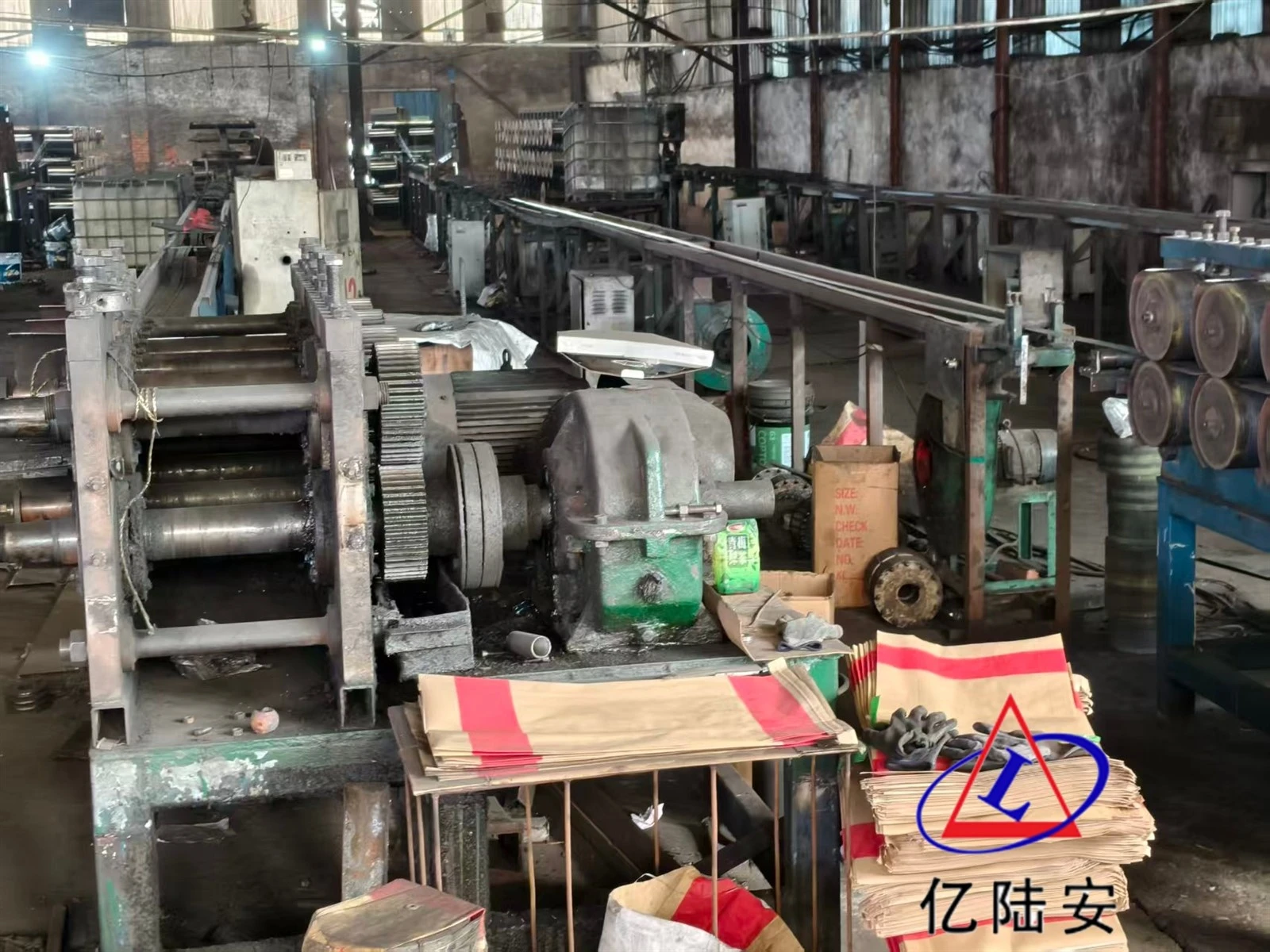
Suggested image placement: actual production equipment at the factory. Alt text: Steel fiber manufacturing equipment at the Yian factory.
2. Check Technical Specifications and Product Consistency
Once the supplier has passed the initial checks, move on to the product itself.
Steel fibers are not interchangeable simply because they look similar. Length, diameter, aspect ratio, tensile strength, and fiber geometry can all matter when determining whether a product meets a project's specification.
For Glued Steel Fiber, ask the manufacturer to provide a technical data sheet (TDS) for the exact model being quoted. Do not rely on a catalogue showing several product options without identifying which one is included in your quotation.
Review the following information:
Fiber length and diameter: Confirm nominal dimensions and specified tolerances.
Aspect ratio: Check the length-to-diameter ratio against the stated dimensions.
Tensile strength: Verify the specified value, test method, and applicable acceptance criteria.
Fiber geometry: Confirm whether the product has hooked ends and whether its shape matches the project requirements.
Model identification: Make sure the product code is consistent across the quotation, TDS, sample label, and purchase order.
ASTM A820/A820M is a recognized specification covering steel fibers for fiber-reinforced concrete. It addresses dimensional requirements, tolerances, physical properties, and testing procedures. Buyers can consult the ASTM A820/A820M standard page when establishing the technical requirements for a purchase: https://store.astm.org/standards/a820
The applicable edition and project specification should always be confirmed before placing an order.
One practical point is often overlooked: the sample and the bulk shipment must match the same approved specifications. If a sample is accepted, record the model number and agreed technical requirements in writing. This gives both parties a clear reference if questions arise during production or inspection.
Suggested image placement: glued steel fiber bundles and a single fiber. Alt text: Glued steel fiber bundles for concrete reinforcement.
3. Evaluate Raw Materials and Quality Control
A good-looking sample is a useful starting point, but it does not establish that every production batch will meet the same requirements.
Ask the manufacturer how incoming raw materials are identified and inspected, which production parameters are controlled, and how finished products are checked before dispatch.
The exact quality-control procedure will vary by factory and product type. Depending on the agreed specification, relevant checks may include fiber dimensions, geometry, tensile properties, visual defects, packaging condition, and batch identification.
You should also ask how inspection results are recorded. A useful inspection report should identify the product or batch, state the properties checked, show the results, and identify the applicable acceptance criteria. Where relevant, it should also identify the test method and testing party.
If independent testing is required, agree on the laboratory, sampling procedure, test scope, cost, and acceptance criteria before production or shipment. This avoids a common purchasing problem: discovering late in the process that the buyer and supplier have different expectations about what constitutes an acceptable result.
For repeat orders, ask whether batch records can be linked to the shipment. Traceability makes it easier to investigate a quality concern without relying on memory or general assurances.
A useful rule: do not ask only, "Can you guarantee the quality?" Ask, "Which checks are performed, what records are available, and how can the results be traced to my order?" Specific answers and verifiable documents are more useful than broad promises.
4. Compare Glued Steel Fiber with Loose Steel Fiber
The choice between Glued Steel Fiber and Loose Steel Fiber should be based on the intended application and mixing process, rather than on appearance or price alone.
Glued Steel Fiber, often called collated steel fiber, consists of individual fibers temporarily bonded into bundles using an adhesive designed for the intended mixing conditions. The bundles are intended to separate during mixing, allowing the individual fibers to distribute through the concrete.
Loose Steel Fiber is supplied as individual, unbundled fibers. Depending on the product, batching system, and mixing procedure, it may require more attention to the feeding rate and addition sequence to help achieve uniform distribution.
Neither format is automatically the better option for every project. The result depends on factors such as fiber geometry, dosage, concrete mixture, mixer type, mixing time, and the method of introducing the fibers.
Before deciding, discuss these points with your concrete producer or technical team:
How will the fibers be fed into the mixer?
Is the existing batching and mixing equipment suitable for the selected product?
What fiber dosage and mixing procedure does the project require?
Will a trial mix be conducted before full-scale production?
How will fiber distribution and concrete performance be evaluated?
If you are comparing products, see the Loose Steel Fiber range: https://www.yianfiber.com/steel-fiber/loose-steel-fiber.html
For buyers concerned about fiber balling or uneven distribution, a controlled trial mix is more informative than relying on a general claim that one product format always mixes better.
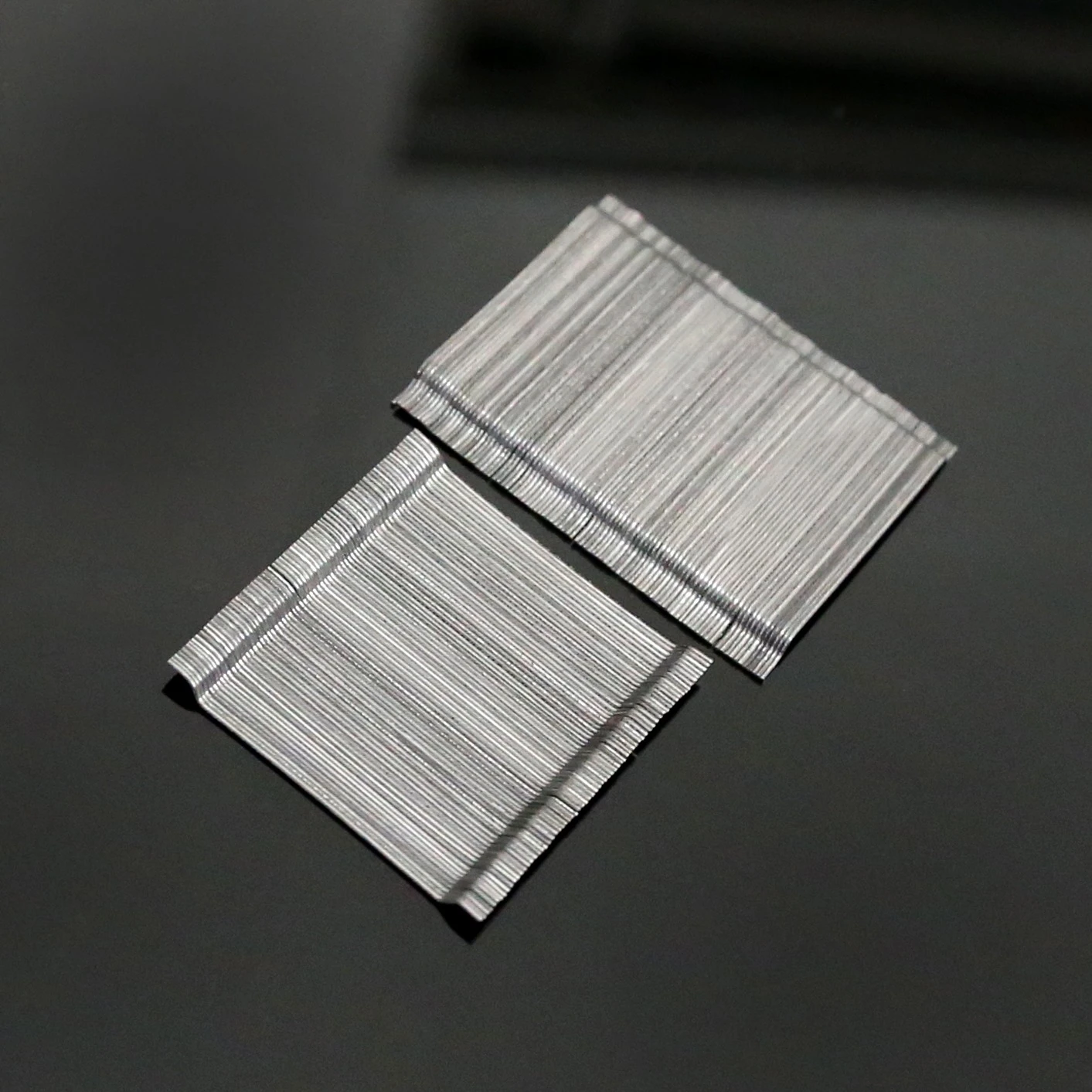
Suggested image placement: close-up of collated steel fiber bundles. Alt text: Close-up of glued steel fiber bundles for concrete mixing.
5. Confirm the End Hooked Steel Fiber Design
Fiber geometry deserves particular attention when comparing suppliers.
End Hooked Steel Fiber features hooked ends designed to improve mechanical anchorage within the concrete matrix. However, the presence of a hook alone does not establish how a fiber-reinforced concrete mixture will perform. Performance also depends on the fiber's dimensions and properties, concrete characteristics, dosage, and the design requirements of the application.
When evaluating an end hooked steel fiber manufacturer, confirm the following:
Fiber length and diameter.
Aspect ratio and dimensional tolerances.
Hook geometry and overall fiber shape.
Specified tensile strength and supporting test documentation.
Compliance with the project's design and material requirements.
Do not compare two products based only on tensile strength or fiber length. Two fibers with different geometries or dimensions may behave differently in the same concrete mixture.
Likewise, a higher tensile strength figure does not automatically mean that one product will deliver better structural performance in every application. The relevant performance criteria must be defined by the project specification and assessed using appropriate testing or engineering calculations.
You can review the End Hooked Steel Fiber product range: https://www.yianfiber.com/steel-fiber/end-hooked-steel-fiber.html
For structural applications, the final selection should be reviewed by the responsible engineer. The manufacturer can supply product data and test documentation, but it should not replace project-specific engineering design.
6. Verify Certifications, Test Reports, and Compliance Documents
Certification and test documentation can help you assess a supplier, but only if you verify what each document actually covers.
Start with the documents required by your project, destination market, and purchasing specification. Depending on the order, these may include a technical data sheet, batch inspection report, third-party test report, management-system certificate, or environmental product declaration (EPD).
Check each document carefully:
Company name: Does the document identify the correct legal entity?
Product scope: Does it cover the specific steel fiber product you are purchasing?
Registration or certificate number: Can the record be checked with the issuing organization?
Validity and issue dates: Is the document current and applicable to the order?
Testing details: Are the test method, measured properties, and results clearly identified where relevant?
The International EPD System has a public record for steel fiber products produced by Tangshan Yian Metal Products Co., Ltd. The listing identifies registration number EPD-IES-0014499:002, gives a version date of June 17, 2024, and lists a validity date of June 9, 2029. Its stated scope includes hooked-end glued steel fibers and hooked-end steel fibers. Buyers can review the public EPD registration and associated documents: https://environdec.com/library/epd14499
This is an example of how to verify a public record, not a substitute for checking the requirements of your particular project.
An EPD reports environmental information based on a defined assessment and set of rules. It is not, by itself, proof that a steel fiber meets every mechanical performance requirement or that a finished concrete structure will achieve a particular result.
The same principle applies to other certificates: verify the scope and purpose instead of assuming that a logo on a website covers every product and application.
7. Inspect Packaging, Shipping, and Export Experience
Technical compliance is only part of a successful order. Packaging and shipping arrangements also affect product condition, handling, and delivery planning.
Ask the supplier to confirm the packing method, net weight per bag, pallet requirements, product labels, and any moisture-protection measures specified for the order. Packaging should be suitable for the planned handling, storage, and transport conditions.
For export shipments, clarify the following before approving the purchase order:
Packaging configuration and total shipment weight.
Whether the cargo will be palletized or loaded without pallets.
Container loading arrangements and applicable weight limits.
Shipping terms, destination port, and responsibility for transport costs.
Expected production lead time and estimated shipping schedule.
Procedures for reporting damaged packaging or discrepancies on arrival.
Do not assume that a quoted container capacity will apply to every order. Actual loading quantities depend on packaging dimensions, pallet configuration, container payload limit, transport regulations, and the specific shipping arrangement.
If the order is substantial, request photographs of the actual packing process and final loaded cargo where available. Confirm that labels and shipping documents use the same product codes and quantities as the approved order.
Experienced buyers also leave enough time for document preparation, inspection, and transport arrangements. A competitive unit price is of limited value if the supplier cannot meet the delivery window required by the project.
8. Compare Total Cost, Lead Time, and After-Sales Support
Price matters, but the cheapest quotation is not always the lowest-cost option once the full order is considered.
When comparing glued steel fiber prices per ton, make sure all suppliers are quoting on the same basis. The product model, technical specification, order quantity, packaging, inspection requirements, and shipping terms should be consistent.
A useful comparison should account for:
Product price and any minimum-order requirements.
Packaging, palletization, and loading costs.
Inspection or third-party testing fees.
Freight and other costs included or excluded from the quotation.
Payment terms and quotation validity.
Production lead time and shipment schedule.
The agreed process for handling quality claims.
For example, one supplier may offer a lower ex-works price while another includes additional packaging or inspection arrangements. Comparing the headline prices alone would not show the full difference.
You should also establish what happens if the delivered product does not match the agreed specification. Ask how claims must be documented, what evidence is required, who reviews the issue, and what remedies are available under the contract.
For repeat purchases, consistency and communication can be just as important as the initial price. A supplier who confirms specifications clearly, provides documents on time, and communicates production changes early is easier to work with over the long term.
Before placing the order, put the key commercial and technical requirements in writing. This should include the product code, approved specifications, quantity, packaging, inspection requirements, delivery terms, and agreed procedures for addressing discrepancies.
Final Checklist Before You Place an Order
The manufacturer's identity and production capabilities have been checked.
The product model and technical data sheet match the project requirements.
Quality-control procedures and relevant inspection records are available.
Glued Steel Fiber or Loose Steel Fiber has been selected based on the mixing process and project needs.
End hooked fiber geometry and performance requirements have been reviewed.
Certificates, test reports, and EPD documents have been checked for validity and scope.
Packaging, loading, delivery terms, and lead time have been agreed.
Price, payment terms, acceptance criteria, and claim procedures are documented.
Completing these checks before ordering helps reduce avoidable misunderstandings and gives both the buyer and supplier a clearer basis for fulfilling the contract.
Frequently Asked Questions
What should I look for in a glued steel fiber manufacturer?
Look for a supplier that can provide clear technical specifications, verifiable business information, documented quality-control procedures, relevant test reports, and a realistic production and shipping plan. The supplier should also be able to explain how the delivered product will be checked against the agreed requirements.
What is the difference between glued steel fiber and loose steel fiber?
Glued Steel Fiber is supplied in bundles of fibers temporarily bonded together, while Loose Steel Fiber is supplied as individual fibers. The appropriate option depends on the mixing equipment, feeding procedure, concrete mixture, and project requirements. Trial mixing can help confirm whether the selected product works with the intended process.
How can I verify the quality of glued steel fiber?
Start with the technical data sheet and confirm the dimensions, aspect ratio, geometry, and specified tensile strength. Request relevant inspection records and check whether the results correspond to the actual product or batch. If independent verification is required, agree on the test method and acceptance criteria before ordering.
Is end hooked steel fiber suitable for every concrete project?
No. End hooked steel fiber is used in various fiber-reinforced concrete applications, but suitability depends on the required performance, design method, concrete mixture, dosage, and applicable standards. The responsible engineer should confirm the selection for the specific project.
What documents should I request before ordering steel fiber?
Depending on the project, request a technical data sheet, relevant test reports, batch inspection documentation, packaging details, and any applicable certificates or environmental declarations. The purchase order should also record the agreed specifications, quantity, inspection requirements, and delivery terms.
How do I compare quotations from different steel fiber suppliers?
First, make sure every supplier is quoting the same product specification, quantity, packaging configuration, inspection requirements, and shipping terms. Then compare the total cost, production lead time, documentation, communication, and agreed procedures for handling quality issues.
Looking for a Glued Steel Fiber Supplier for Your Next Project?
If you are sourcing Glued Steel Fiber for concrete production, industrial flooring, shotcrete, or another specified application, the best place to start is with your actual project requirements.
Contact Tangshan Yian Metal Products Co., Ltd. to discuss your required steel fiber specifications and request a quotation.
To help us assess your requirements, please include:
Required product type and model, if already specified.
Fiber length, diameter, aspect ratio, and tensile strength requirements.
Estimated order quantity.
Destination country or port.
Packaging, inspection, and documentation requirements.
Your target delivery schedule.
Our team can then review the information with you and discuss the available product options and the documentation applicable to your order.
Contact Person: Tina
Company: Tangshan Yian Metal Products Co., Ltd.
Website: https://www.yianfiber.com/
Email: tinasong@yianmetal.com
Phone: +86 133 9305 6178
A clear specification and a well-defined quotation are the first steps toward a smoother purchasing process. Share your requirements with us, and let's discuss the right steel fiber option for your project.