



Hey there! As a supplier of brass steel fiber, I've been asked a lot about how this amazing material interacts with other substances. So, I thought I'd take a deep - dive into this topic and share some cool insights with you.
First off, let's talk about the basics of brass steel fiber. It's a composite material that combines the properties of brass and steel. Brass brings in its corrosion - resistance and aesthetic appeal, while steel provides strength and durability. This unique combination makes brass steel fiber a versatile option in many industries.
Interaction with Concrete
One of the most common applications of brass steel fiber is in concrete. When brass steel fiber is added to concrete, it forms a three - dimensional reinforcement network. This network helps to distribute stress more evenly throughout the concrete structure.
The interaction between brass steel fiber and concrete starts right from the mixing process. The fibers disperse within the concrete mixture, and as the concrete hardens, they bond with the cement matrix. This bonding is crucial as it allows the fibers to take on some of the load that would otherwise cause cracks in the concrete.
For example, in large - scale construction projects like bridges or high - rise buildings, the addition of brass steel fiber can significantly improve the concrete's resistance to cracking and impact. You can learn more about this in Concrete with Metal Fiber. The fibers act like tiny reinforcements, holding the concrete together and preventing the propagation of cracks.
Interaction with Polymers
Brass steel fiber also has interesting interactions with polymers. When incorporated into polymer matrices, the fibers can enhance the mechanical properties of the polymer. For instance, in automotive parts made from polymers, adding brass steel fiber can increase the part's strength and stiffness.
The key to a good interaction between brass steel fiber and polymers is proper dispersion. If the fibers are well - dispersed in the polymer, they can effectively transfer stress from the polymer matrix to themselves. This results in a composite material that is stronger and more resistant to deformation.
However, it's important to note that the surface of the brass steel fiber may need to be treated to improve its adhesion to the polymer. Some polymers may require a specific chemical treatment on the fiber surface to ensure a strong bond. This interaction can lead to the development of high - performance polymer - based materials used in various industries, from aerospace to consumer goods.
Interaction with Wood
In the wood industry, brass steel fiber can be used to enhance the properties of wood - based products. When mixed with wood chips or sawdust in the production of engineered wood products like particleboard or fiberboard, the fibers can improve the strength and dimensional stability of the final product.
The brass steel fiber interacts with the wood particles by providing additional reinforcement. It helps to prevent the wood from warping or splitting under stress. This is particularly useful in applications where the wood product is exposed to moisture or mechanical loads.
For example, in outdoor furniture made from engineered wood, the addition of brass steel fiber can make the furniture more durable and long - lasting. The fibers act as a support system, keeping the wood structure intact even in harsh environmental conditions.
Interaction with Other Metals
Brass steel fiber can also interact with other metals. In metal - matrix composites, it can be combined with other metals to create materials with unique properties. For example, when mixed with aluminum, brass steel fiber can improve the strength and wear resistance of the aluminum alloy.
The interaction between brass steel fiber and other metals occurs at the atomic level. The fibers form a bond with the metal matrix, and this bond can enhance the overall performance of the composite material. This type of interaction is widely used in the manufacturing of high - performance components for the aerospace and automotive industries.
Milling Steel Fiber and Its Interactions
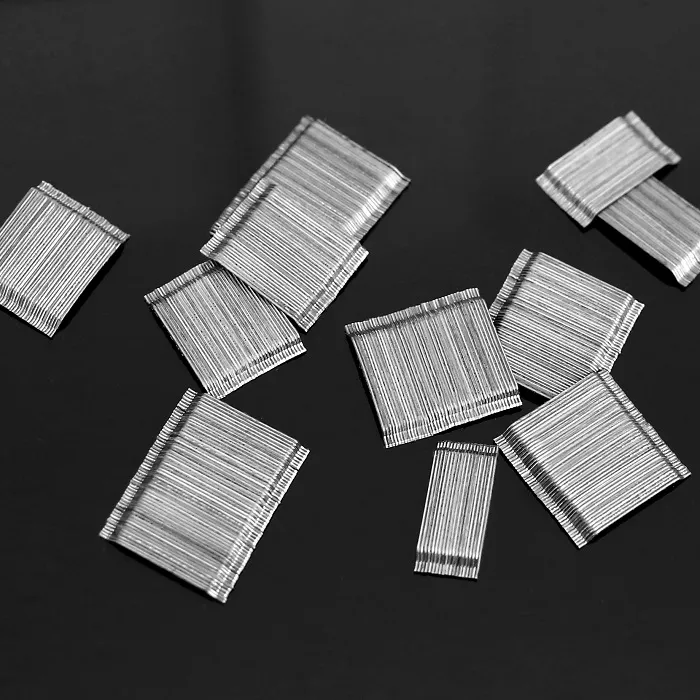
Milling Steel Fiber is a specific type of brass steel fiber that is produced through a milling process. This type of fiber has a unique shape and surface characteristics that can affect its interaction with other materials.
Milling steel fiber is often used in applications where a high degree of reinforcement is required. In concrete, for example, the irregular shape of the milling steel fiber can provide better anchorage within the concrete matrix, leading to improved crack resistance.
In polymer composites, the rough surface of the milling steel fiber can enhance its adhesion to the polymer, resulting in a stronger and more durable composite material.
Steel Fiber for Floor and Its Role
Steel Fiber for Floor is another important application of brass steel fiber. When used in floor construction, the fibers can improve the floor's resistance to abrasion, impact, and cracking.
The interaction between the steel fiber and the floor material, usually concrete, is crucial for the performance of the floor. The fibers distribute the load evenly across the floor surface, preventing the formation of cracks. This is especially important in high - traffic areas such as warehouses, factories, and commercial buildings.

Why You Should Consider Brass Steel Fiber
If you're in an industry that requires high - performance materials, brass steel fiber could be the solution you're looking for. Its unique interactions with other materials can bring a range of benefits, from improved strength and durability to enhanced resistance to various types of damage.
Whether you're in construction, manufacturing, or any other field, brass steel fiber can offer a cost - effective way to improve the quality of your products. And as a supplier, I'm here to help you understand how to use this material to its fullest potential.
If you're interested in learning more about brass steel fiber or are considering a purchase, don't hesitate to reach out. We can have a detailed discussion about your specific needs and how brass steel fiber can meet them.
References
- "Composite Materials Handbook" by John Wiley & Sons
- "Concrete Technology" by McGraw - Hill
- "Polymer Composites: Principles and Applications" by CRC Press