



The addition of steel fibres to cement can significantly alter its electrical conductivity. As a leading Cement Steel Fibre supplier, we are deeply involved in understanding and leveraging this phenomenon. In this blog, we will delve into the ways steel fibre affects the electrical conductivity of cement, exploring the underlying mechanisms, influencing factors, and practical applications.
Mechanisms of Electrical Conductivity Change
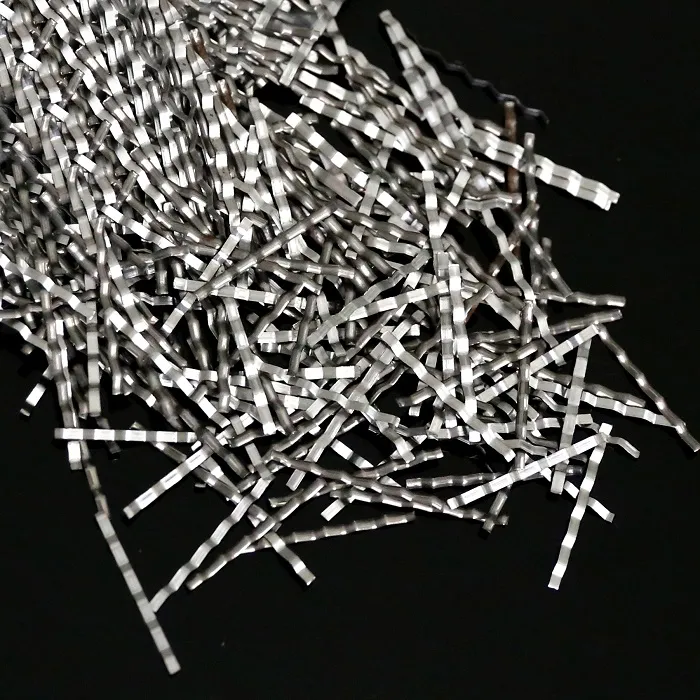
When steel fibres are incorporated into cement, they create a conductive network within the cement matrix. Cement itself is a poor conductor of electricity due to its insulating nature. However, steel is a good conductor. As the steel fibres disperse throughout the cement, they can form pathways for the flow of electric current.
The formation of this conductive network depends on several factors. Firstly, the volume fraction of steel fibres is crucial. A higher volume fraction means more fibres are present in the cement, increasing the likelihood of the fibres coming into contact with each other and forming continuous conductive paths. For example, when the volume fraction of steel fibres reaches a certain threshold, known as the percolation threshold, a sudden increase in electrical conductivity occurs.
Secondly, the aspect ratio of the steel fibres also plays a significant role. The aspect ratio is defined as the ratio of the length to the diameter of the fibre. Fibres with a high aspect ratio are more likely to bridge gaps between other fibres, enhancing the connectivity of the conductive network. This is because longer fibres have a greater chance of intersecting with other fibres, creating more conductive pathways.
Influencing Factors
Apart from the volume fraction and aspect ratio, there are other factors that can influence the effect of steel fibres on the electrical conductivity of cement.
Fibre Distribution
Uniform distribution of steel fibres is essential for achieving consistent electrical conductivity. If the fibres are clustered together in some areas and sparse in others, the conductive network will be uneven, leading to variations in electrical conductivity across the cement sample. Our company takes great care in ensuring the proper dispersion of steel fibres in the cement during the mixing process. We use advanced mixing techniques and additives to promote a more homogeneous distribution of fibres, which helps to optimize the electrical conductivity of the final product.
Fibre Type
Different types of steel fibres can have different effects on the electrical conductivity of cement. For instance, Copper Coated Steel Fiber has enhanced electrical conductivity compared to ordinary steel fibres due to the high conductivity of copper. The copper coating not only provides a more conductive surface but also protects the steel core from corrosion, which can maintain the integrity of the conductive network over time.
Similarly, 4D Steel Fiber has a unique shape and structure that can improve the connectivity of the conductive network. The special design of 4D steel fibres allows them to interlock with each other more effectively, creating a more stable and continuous conductive path within the cement matrix.
Cement Composition
The composition of the cement itself can also interact with the steel fibres and affect the overall electrical conductivity. For example, the presence of certain chemical admixtures in the cement can change the surface properties of the steel fibres, either promoting or inhibiting the formation of the conductive network. Additionally, the water - to - cement ratio can influence the porosity of the cement matrix. A higher water - to - cement ratio generally leads to a more porous structure, which can disrupt the conductive network formed by the steel fibres.
Practical Applications
The ability to control the electrical conductivity of cement using steel fibres has opened up a wide range of practical applications.
Structural Health Monitoring
In civil engineering, the electrical conductivity of cement - based materials can be used as an indicator of structural health. By monitoring the changes in electrical conductivity over time, engineers can detect early signs of damage, such as cracks or corrosion, in concrete structures. Steel - fibre - reinforced cement can be used in critical infrastructure projects, such as bridges and tunnels. Fiber for Tunnel applications are particularly important as they can help ensure the long - term safety and durability of tunnel structures. The electrical conductivity of the steel - fibre - reinforced cement lining can be monitored to detect any potential issues, such as water ingress or structural deformation, before they become serious problems.
Electromagnetic Shielding
In some applications, such as in buildings close to electrical substations or in high - tech facilities, electromagnetic shielding is required to protect sensitive equipment and electronics from electromagnetic interference. Steel - fibre - reinforced cement can be used as an effective electromagnetic shielding material. The conductive network formed by the steel fibres can absorb and reflect electromagnetic waves, reducing the electromagnetic field inside the building. This is especially useful in data centers, hospitals, and military facilities.
Deicing and Snow Melting
In cold climates, steel - fibre - reinforced cement can be used for deicing and snow melting applications. By passing an electric current through the conductive cement, heat is generated, which can melt snow and ice on roads, sidewalks, and airport runways. This is a more environmentally friendly and efficient alternative to traditional deicing methods, such as the use of salt, which can cause corrosion and environmental damage.

Our Offerings
As a Cement Steel Fibre supplier, we offer a wide range of high - quality steel fibres to meet the diverse needs of our customers. Our Steel Fibre Types include various shapes, sizes, and coatings, each with its own unique properties and applications.
We also provide Copper Coated Microwires, which can further enhance the electrical conductivity of cement. These microwires have a very small diameter, which allows for a more uniform distribution in the cement matrix and can create a denser conductive network.
Our team of experts is dedicated to providing technical support and guidance to our customers. We can help you choose the most suitable steel fibres for your specific application, taking into account factors such as the desired electrical conductivity, mechanical properties, and cost.
Contact Us for Procurement
If you are interested in purchasing our cement steel fibres for your projects, we encourage you to contact us for procurement and further discussion. Our professionals are ready to assist you in finding the best solutions for your needs, whether you are working on a small - scale construction project or a large - scale infrastructure development. We are committed to providing high - quality products and excellent customer service.
References
- Banthia, N., & Sappakittipakorn, M. (2007). Electrical resistivity of cement - based composites with steel fiber. Cem. Concr. Compos., 29(10), 772 - 779.
- Ramakrishnan, V., & Sundaresan, S. (1998). Electrical conductivity of steel fiber reinforced concrete. Cement and Concrete Research, 28(11), 1677 - 1684.
- Li, V., & Leung, C. (1992). Micromechanics of fiber - reinforced cement - based composites. Journal of Engineering Mechanics, 118(1), 144 - 162.